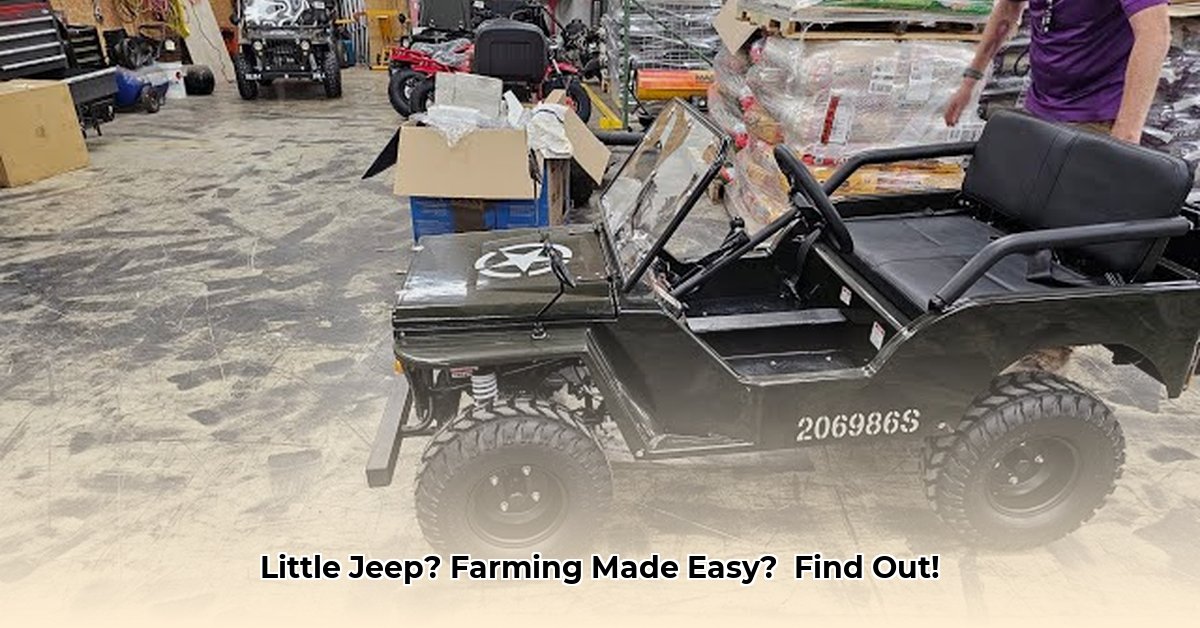
Thinking about tackling those smaller farm chores without breaking the bank? The Massimo mini-tractor, affectionately nicknamed the "Little Jeep" at Tractor Supply, might be your perfect solution. This compact machine offers surprising functionality for its size and price, but like any tool, it has its strengths and weaknesses. Let's explore if it's the right fit for your needs. For extra storage, consider a spare tire mount.
Sizing Up the Little Jeep: Power and Practicality
The Little Jeep's compact design allows easy navigation in tight spaces, making it ideal for smaller farms, hobby farms, or hard-to-reach areas on larger properties. While it lacks the power of full-sized tractors, its power-to-size ratio is impressive for light-duty tasks. But does it have enough power for your projects? Let's find out.
What Can This Little Tractor Actually Do?
This mini-tractor handles various jobs. Imagine effortlessly tilling garden plots, hauling light loads, or mowing a large lawn. However, it's not suited for plowing massive fields or dragging heavy equipment; it excels at smaller, manageable tasks. The range of compatible attachments (tiller, mower deck, small trailer) significantly impacts its versatility. Consider your needs before purchasing.
Reliability and Maintenance: The Long-Term Picture
Reliability is a concern for smaller tractors. While some owners report years of trouble-free use, others mention quirks or weak points. Proper maintenance is crucial. Regular servicing, using recommended lubricants and fuels, and promptly addressing minor issues extend the machine's lifespan. Access to parts is also key; downtime during crucial seasons is costly. How easily can you source replacement parts?
The Price is Right… But What About the Rest?
The Little Jeep's affordability is a major draw, making it accessible to those who can't afford full-sized tractors. But consider the total cost of ownership. Factor in fuel consumption (likely modest due to the smaller engine), potential repair costs, and maintenance. Will initial savings translate to long-term cost-effectiveness? This depends on usage and equipment condition.
Sustainability: Does the Little Jeep Tread Lightly?
Environmental impact is important. Consider the Little Jeep's fuel efficiency and emissions. While the smaller engine likely burns less fuel than larger tractors, detailed emission data is often limited. Advancements are constantly improving fuel efficiency and emissions in mini-tractors. Gathering data on fuel consumption and emissions helps determine if it aligns with your environmental goals.
Who's This Tractor For? Finding the Right Fit
The Little Jeep isn't a one-size-fits-all solution. It's perfect for small-scale farming, hobby farms, or those with limited acreage. Owners with larger plots or heavier-duty needs will likely require a more powerful machine. This is a precision tool, ideal for detailed work, not a powerhouse for massive undertakings.
Weighing the Pros and Cons: A Balanced View
| Pros | Cons |
|---|---|
| Affordable purchase price | Potential reliability issues |
| Excellent maneuverability | Limited power compared to larger tractors |
| Versatile for a range of tasks | Parts availability may be a concern |
| Relatively easy to maintain | Environmental impact data is limited |
The Verdict: A Practical Choice, But Do Your Homework
The Massimo mini-tractor offers strong value. For budget-conscious farmers and landowners, it provides ample functionality, but investigating long-term reliability and parts availability is essential. Carefully assess your needs and operational context. Is it the right tool for your specific job?
How to Maintain Your Massimo Mini Tractor for Long-Term Reliability
A Massimo mini-tractor is an investment. This guide details essential steps for keeping your machine in top shape.
Regular Inspections: Your First Line of Defense
Regular inspections are crucial. Before each use, visually inspect tires, belts, hoses, lights, and fluid levels. Address small issues promptly to prevent larger, costlier problems.
Fluid Changes: The Life Blood of Your Tractor
Regular fluid maintenance (oil, hydraulic fluid, coolant) is vital. Consult your owner's manual for recommended intervals. Neglecting this leads to engine and hydraulic system failure. Dispose of used fluids properly.
Air Filters: Breathing Easy
A clogged air filter impacts performance and can damage the engine. Check and replace your air filter regularly (frequency specified in your owner's manual).
Cleaning and Storage: Protecting Your Investment
Clean your mini-tractor after each use, removing mud and debris. Proper storage (disconnecting the battery and covering it) protects it from the elements.
Creating a Customized Maintenance Schedule
Tailor your maintenance plan to your usage. Heavy-duty work requires more frequent maintenance than occasional use. Consider the terrain you work on.
Professional Maintenance: When to Call in the Experts
While many tasks are DIY-friendly, major repairs and complex system checks are best left to trained mechanics. Regular professional servicing helps identify potential problems early.
Action Plan: A Sample Yearly Maintenance Schedule
| Month | Task | Notes |
|---|---|---|
| 1 | Initial Inspection | Check everything thoroughly. |
| 3 | Oil Change | Refer to your owner's manual for recommended interval. |
| 6 | Air Filter Inspection | Replace if dirty. |
| 9 | Fluid Level Checks | Oil, hydraulic, coolant |
| 12 | Full Inspection and Cleaning | Address any issues and prepare for storage if necessary |
This schedule is a guide. Adjust it based on your tractor's use and your owner’s manual.